
During the current EHV-1/EHM outbreak in the United States, every brush, bucket, and blanket in your barn should be treated as potential biosecurity equipment—not just barn clutter. Recent cases linked to major rodeo and barrel racing events in Texas and multiple other states have prompted state agencies and veterinary schools to urge horse owners to tighten biosecurity immediately.
Because EHV-1 can spread not only by nose-to-nose contact but also on contaminated equipment like water buckets, tack and grooming supplies, careful management of your grooming tools is one of the most practical ways to help protect your horses.
Why sharing is so risky
EHV-1 and EHM are spread via respiratory droplets and “fomites” – objects that carry infectious material. That includes:
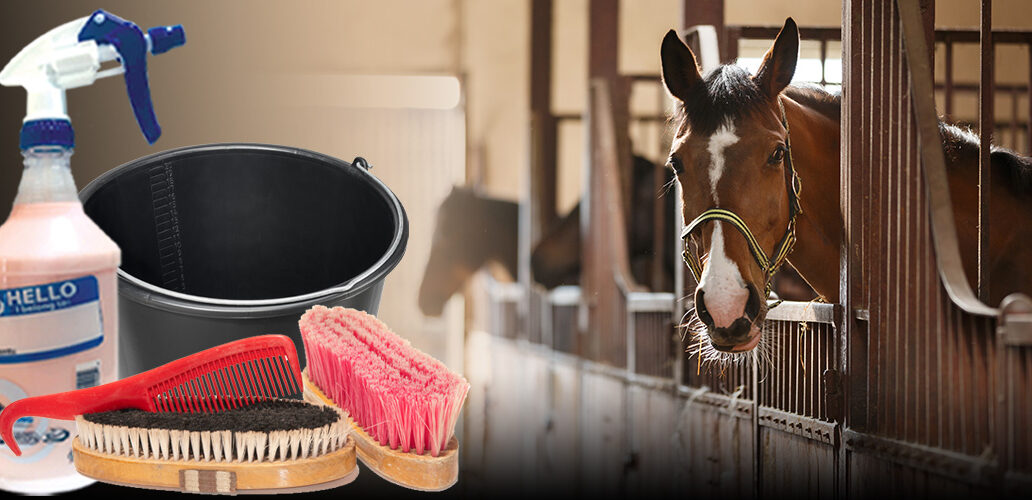
- Brushes, curry combs, mane/tail combs
- Towels, sponges, sweat scrapers
- Halters, lead ropes, boots, saddle pads
- Feed and water buckets, mucking tools, even your clothes and hands
Horses can shed virus before they look sick, so a seemingly healthy horse can leave virus on a shared brush or bucket. The next horse groomed or watered with that equipment may get a high enough dose to become ill or even develop neurologic EHM.
Blankets and sheets are another overlooked risk. The Equine Disease Communication Center specifically notes that “not sharing” should extend beyond grooming tools to tack, pads, blankets, and medical supplies, because these fabrics can trap nasal secretions and virus.
Best practices for grooming-tool biosecurity
1. One horse, one grooming kit
Assign each horse its own grooming kit: brushes, curry, mane/tail brush, hoof pick, towels, and sponges. Clearly label items by horse name or color-coding tape so they never get mixed up. Competitions and veterinary groups recommend this individualized approach to minimize cross-contamination.
2. Stop sharing buckets and tubs
Each horse should have its own feed and water buckets—no communal troughs during this outbreak. Buckets should be cleaned daily and disinfected regularly; guidelines for neurologic EHV-1 stress not allowing horses to share water sources and cleaning buckets daily.
Rinse off organic matter first, then wash with detergent and hot water, and finally apply an appropriate disinfectant (such as a labeled equine-safe disinfectant or properly diluted bleach), following label directions and allowing the recommended contact time.
3. Clean and disinfect grooming tools often
At least several times a week—daily for exposed or traveling horses—remove hair and dirt, wash tools in soapy water, then soak or spray with an approved disinfectant. Pay special attention to wooden backs and fabric items, which can be harder to disinfect thoroughly; in high-risk settings, consider cheap, fully washable tools you can discard if needed.
4. Control blankets and soft gear
Do not share blankets, coolers, saddle pads, or shipping boots between horses. Launder them frequently in hot water and detergent; add a disinfectant compatible with fabrics when appropriate. Store clean items in sealed bins or bags to prevent re-contamination in the tack room.
5. Don’t forget the humans
Humans are not infected by EHV-1, but we are excellent mechanical carriers. Agencies emphasize washing hands, changing or covering clothes and boots, and disinfecting gear after handling different groups of horses.
At home and on the road
At shows, clinics, or rodeos, pack your own clearly labeled grooming kit, buckets, and soft gear—and plan to use only those. Avoid borrowing or lending, even “just once.” When you get home, treat everything that left the property as potentially contaminated: clean, disinfect, and then return it to normal storage.
Thoughtful management of grooming tools and equipment won’t eliminate all risk, but in the middle of an active EHV/EHM outbreak, it’s one of the simplest, most effective ways you can help keep your horses safe.